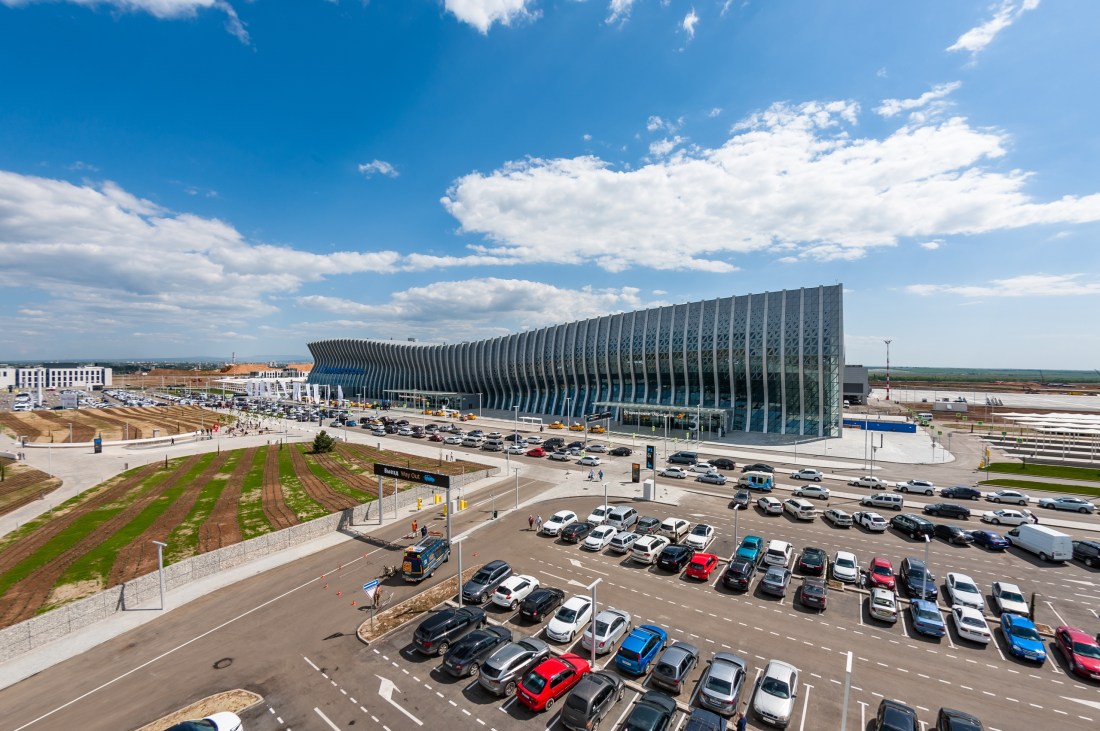
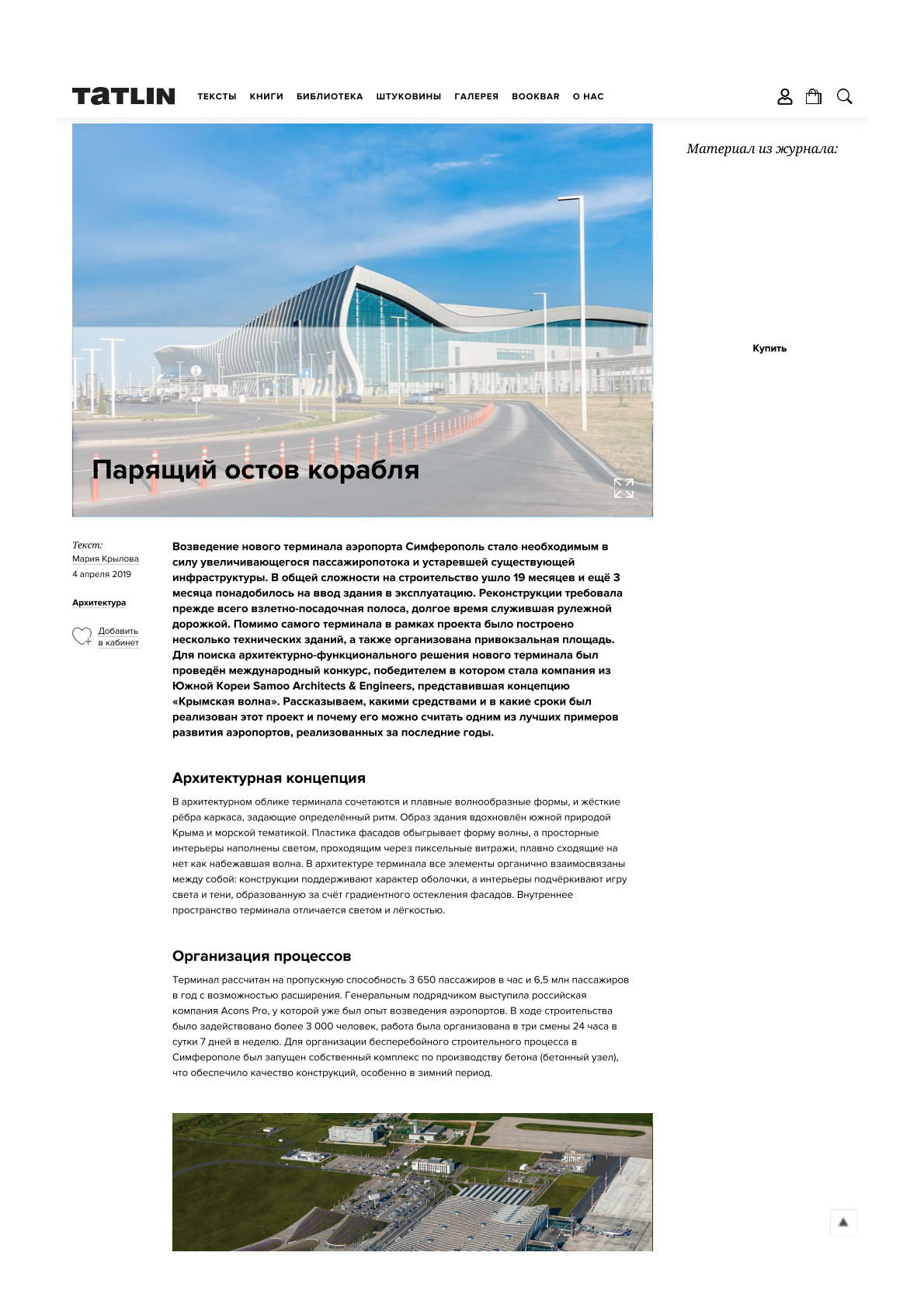
The construction of the new terminal at Simferopol airport became necessary due to increasing passenger traffic and the outdated state of existing infrastructure. In total, construction took nineteen months, with another three months required for commissioning the building. The runway, which had long served as a taxiway, was the first element in need of reconstruction. In addition to the terminal itself, the project included several technical facilities and the creation of a forecourt area. To determine the architectural and functional design of the new terminal, an international competition was held. The winner was the South Korean company Samoo Architects & Engineers, which presented the concept “Crimean Wave.”
This article looks at how the project was realized, within what timeframe, and why it can be considered one of the finest examples of recent airport development.
Architectural Concept
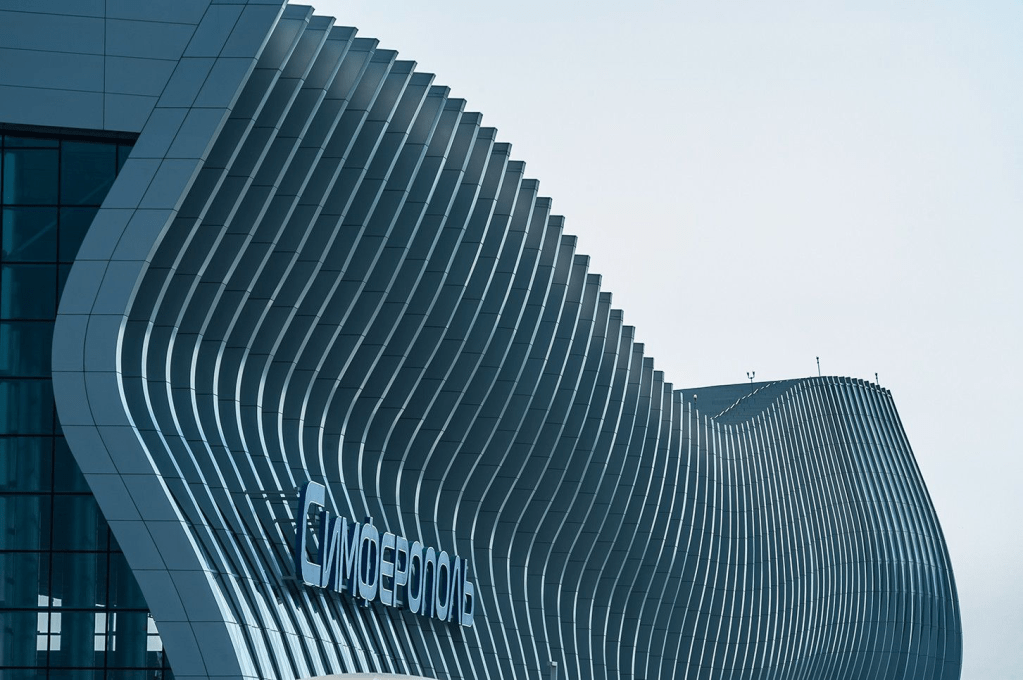
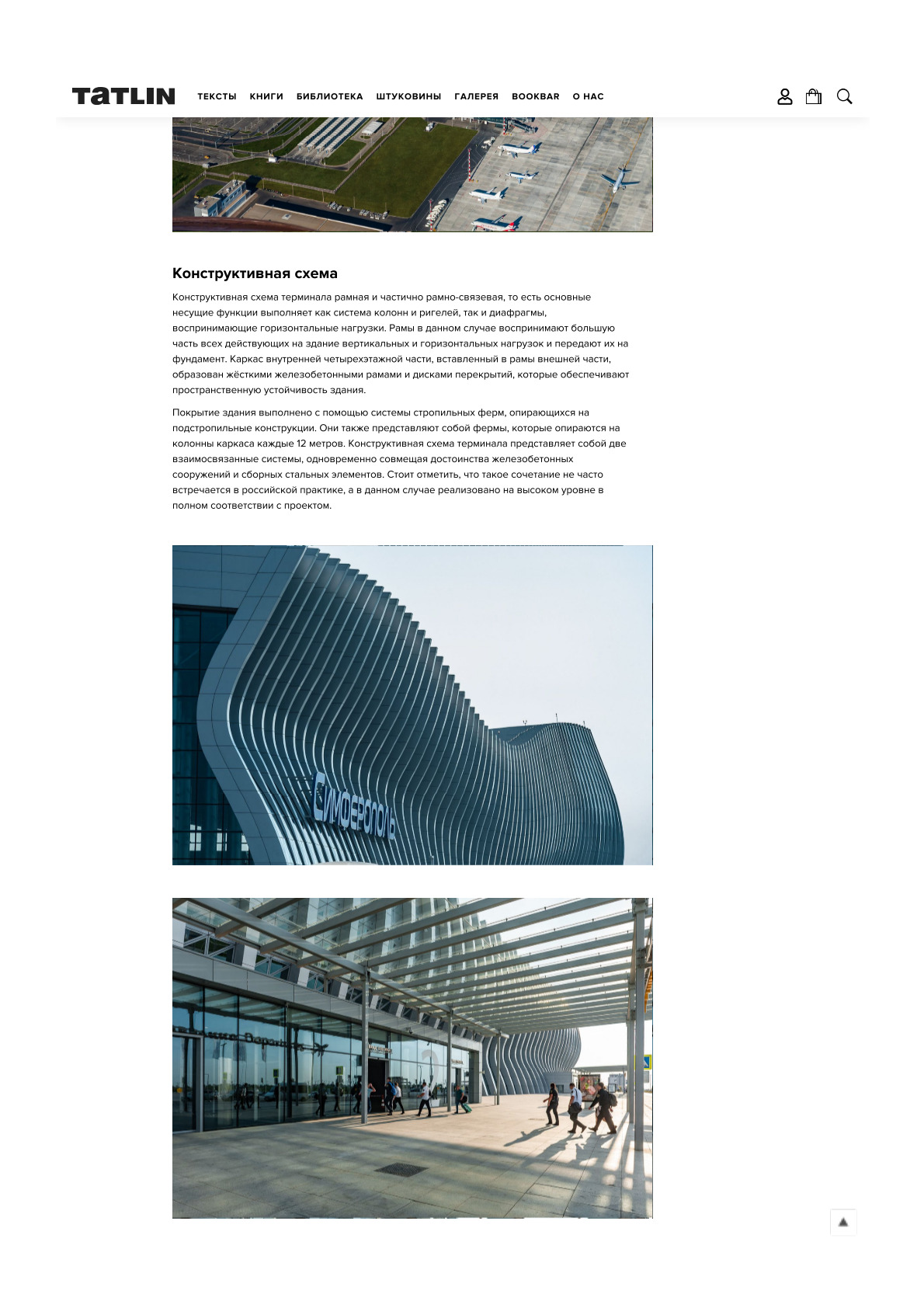
The architectural appearance of the terminal combines smooth, wave-like forms with the rigid ribs of its structural frame, which set a distinct rhythm. The design was inspired by the southern landscape of Crimea and the maritime theme. The plasticity of the façades echoes the motion of a wave, while the spacious interiors are filled with light streaming through pixelated stained-glass panels, fading away like a receding tide. Every element of the terminal’s architecture is harmoniously interconnected: the structural framework supports the dynamic shell, while the interiors emphasize the play of light and shadow created by the gradient glazing of the façades. The interior spaces are notable for their brightness and sense of lightness.
Process Organization
The terminal was designed for a throughput capacity of 3,650 passengers per hour, or 6.5 million passengers per year, with the possibility of future expansion. The general contractor was the Russian company Acons Pro, which already had experience in airport construction. More than 3,000 people were involved in the project, working in three shifts around the clock, seven days a week. To ensure an uninterrupted construction process, a concrete production facility was launched directly on site in Simferopol, guaranteeing consistent quality of materials, particularly during the winter season.
Structural Design
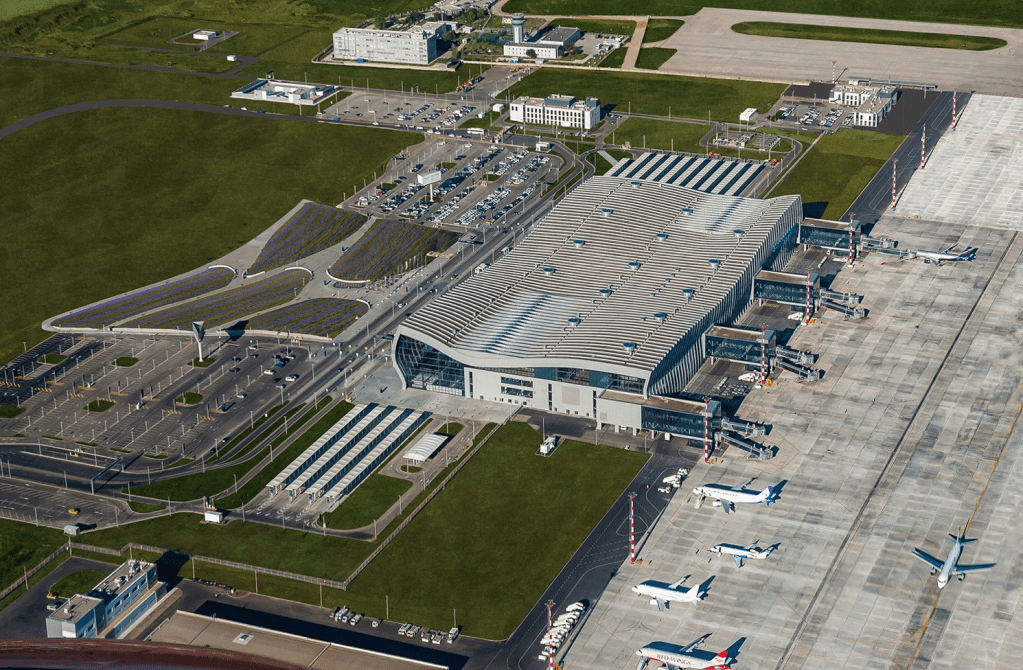
The structural system of the terminal is a frame and partially frame-braced type, meaning that both the columns and beams and the shear walls share the load-bearing function, resisting vertical and horizontal forces. The frames bear most of the loads acting on the building and transfer them to the foundation. The internal four-story part of the structure, inserted within the outer frames, is formed by rigid reinforced-concrete frames and slab diaphragms, which provide overall spatial stability.
The roof structure is composed of trussed rafters supported by sub-trusses, which in turn rest on the main columns at twelve-meter intervals. The terminal thus represents two interlinked structural systems, combining the advantages of reinforced-concrete structures with prefabricated steel elements. Such a hybrid solution is rare in Russian practice, yet in this case it was executed at a very high level, in full accordance with the project specifications.
Lighting
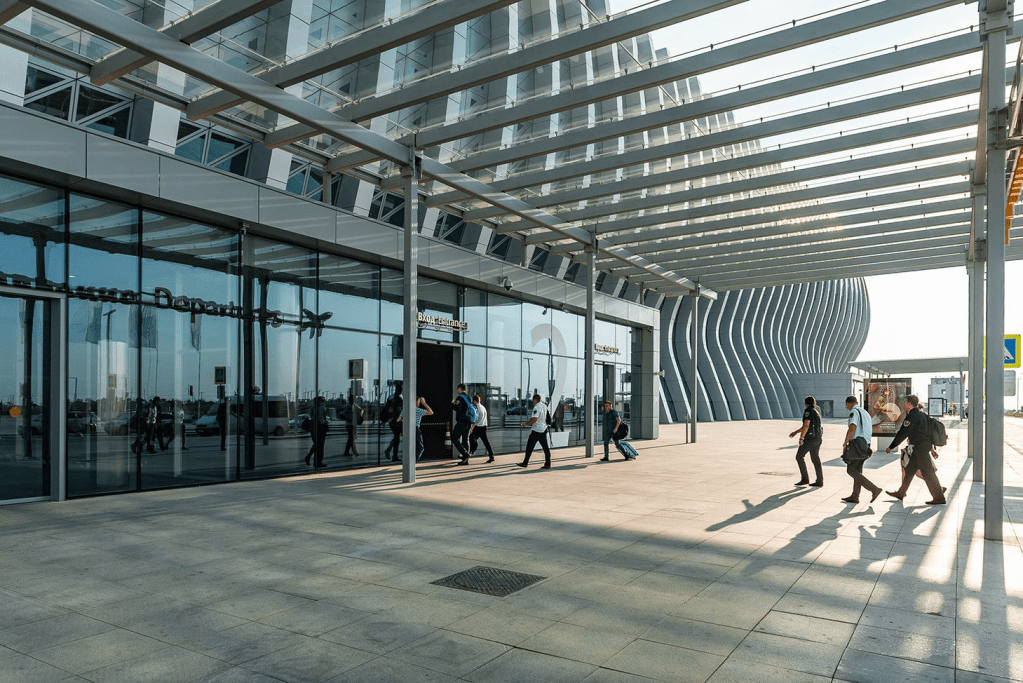
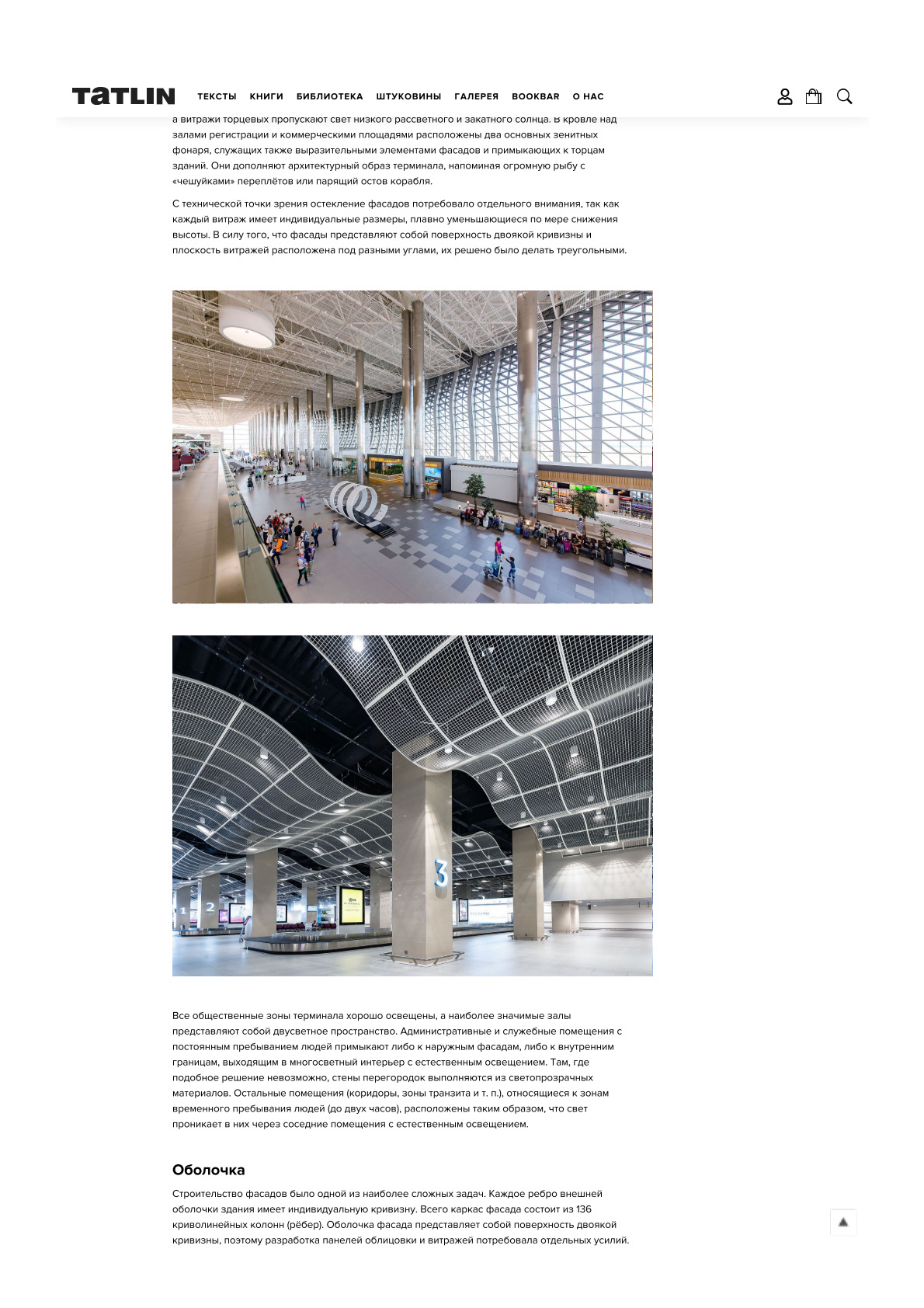
Light and spatial volume are defining features of the terminal — and something that many passengers note. The glazing of the longitudinal façades fills the interior with daylight, while the end façades capture the soft light of sunrise and sunset. Two main skylights above the check-in halls and commercial areas also act as expressive architectural elements, adjoining the ends of the building. They complement the overall image of the terminal, which evokes a giant fish with glimmering scales, or the floating hull of a ship.
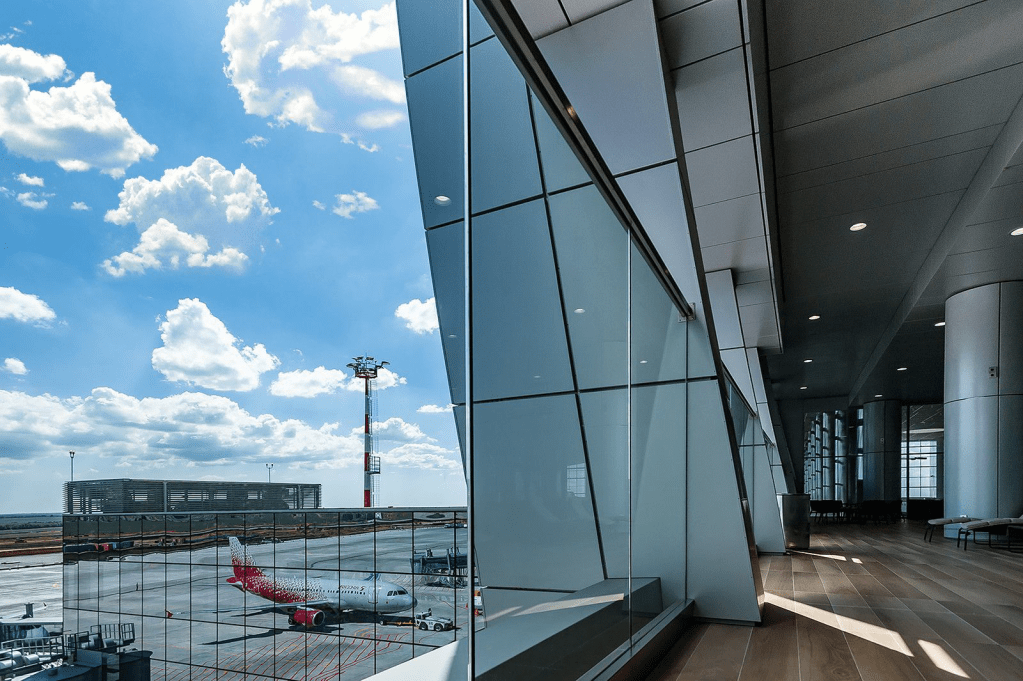
From a technical standpoint, the façade glazing required precision: each window panel has unique dimensions, gradually decreasing in size towards the lower levels. Because the façades form double-curved surfaces, with glass panes set at varying angles, it was decided to make them triangular.
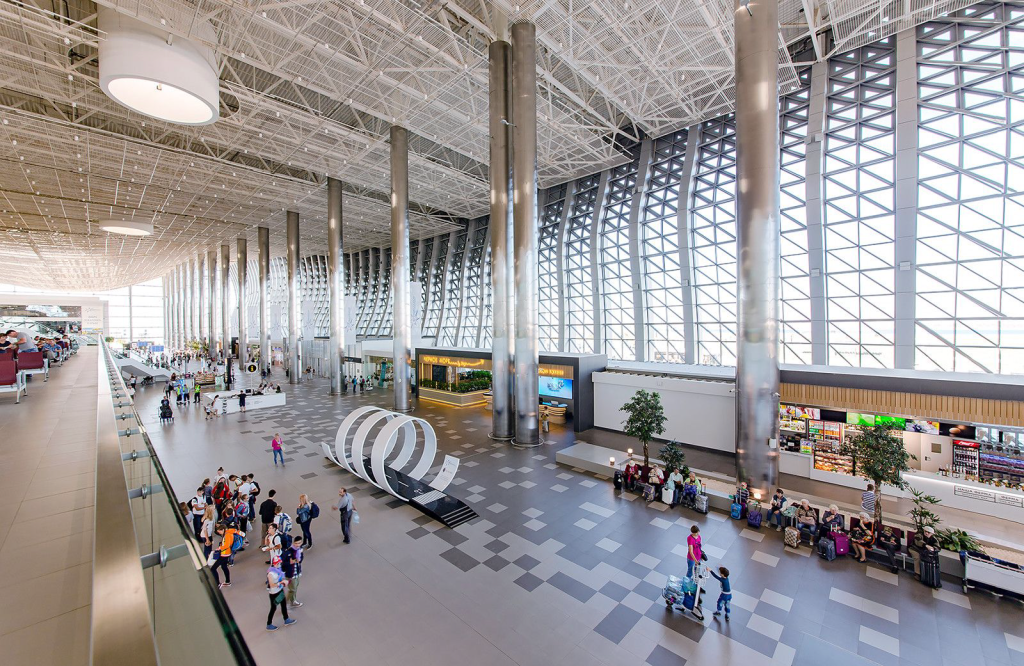
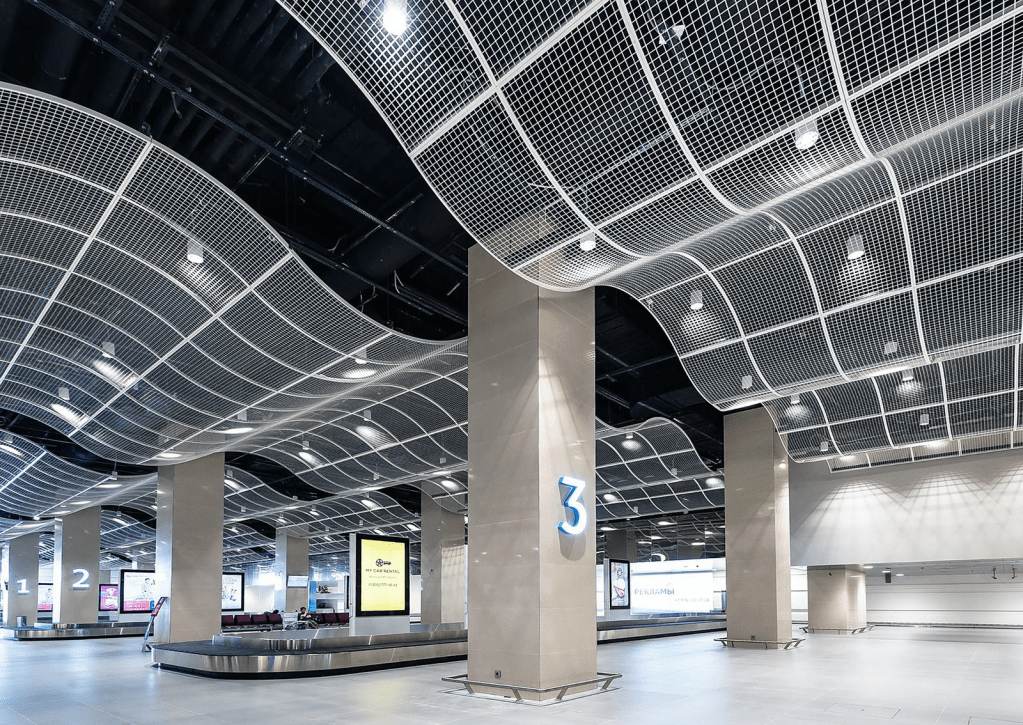
All public areas of the terminal are well lit, and the most significant halls are designed as double-height spaces. Administrative and service rooms with permanent staff are placed either along the outer façades or adjacent to internal boundaries facing the main interior zones with natural light. Where this was not possible, partitions were made of translucent materials. Corridors, transit zones, and other areas of temporary occupancy (up to two hours) were arranged so that daylight could reach them through neighboring illuminated spaces.
The Façade Shell
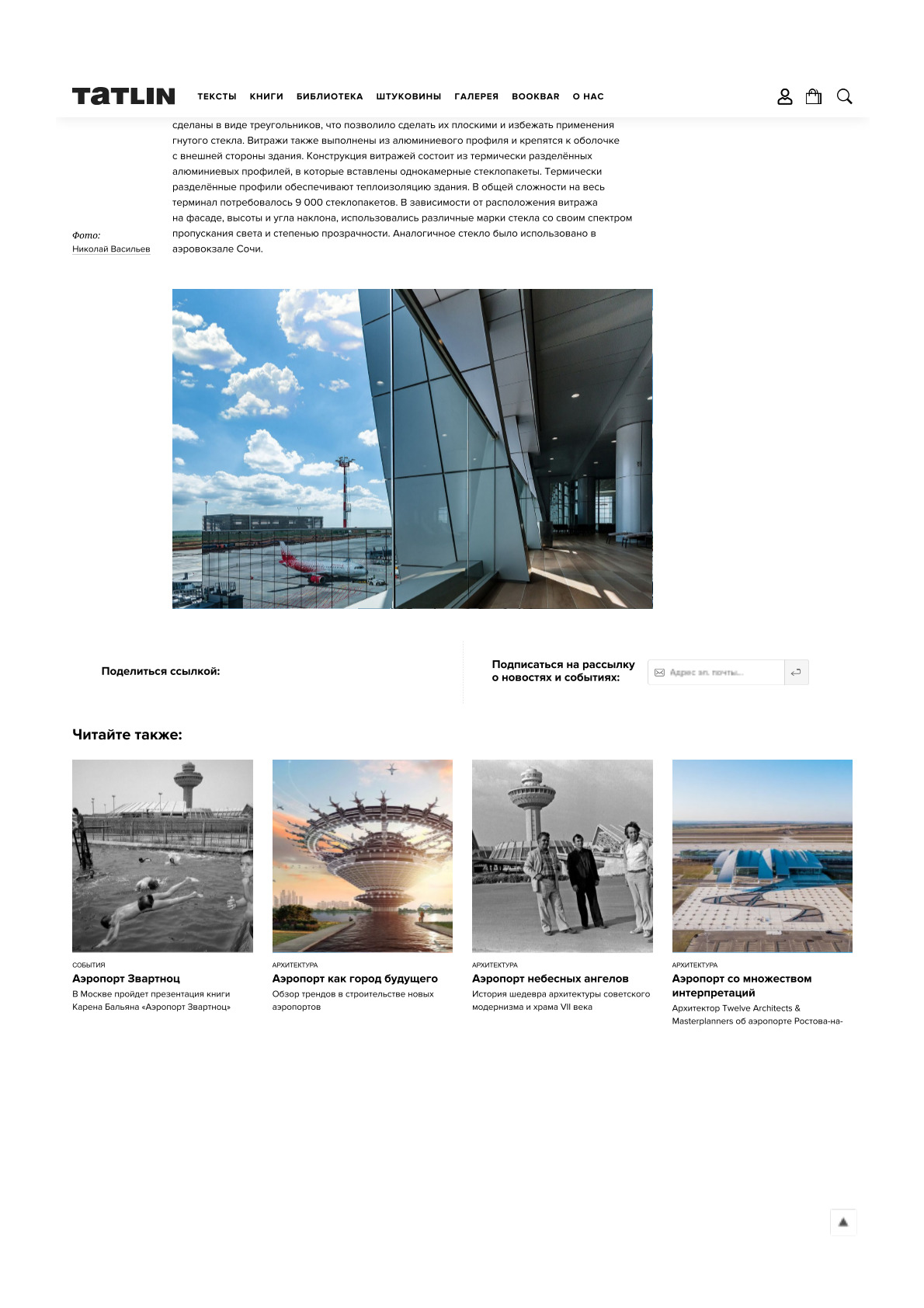
The construction of the façades was among the most challenging stages of the project. Each rib of the outer shell has its own curvature. Altogether, the façade framework consists of 136 curved columns (ribs). Because the façade surface is double-curved, the development of cladding panels and glazing required individual design work. The façade cladding employs a spatial structural shell system (Space Structure), developed by the Russian company Nesushchie Sistemy(“Bearing Systems”), which also implemented the glass canopy of Zaryadye Park in Moscow.
The shell is composed of rod and nodal elements, forming a triangular grid that covers the entire façade. The glazing panels are likewise triangular, which made it possible to use flat glass and avoid expensive curved units. They are made of aluminum profiles and attached to the shell from the outside. Each panel consists of thermally separated profiles with single chamber insulating glass units, providing high thermal insulation. In total, the terminal required about 9,000 glass panels. Depending on their position, height, and angle, various glass types were used, each with its own light transmission and transparency characteristics. Similar glazing technology was previously used at Sochi Airport.
Text by: Maria Krylova
Photographs by: Nikolay Vasiliev
The full text is published in TATLIN journal (in RUS).
Buy journal here.

 Personal website